

Reddy Book Sports are more interesting when we understand what happens beyond the final score. Every cricket match, football game, and basketball contest involves tactics, statistics, player decisions, and unexpected moments. For beginners, learning these details can feel difficult at first. The right sports books make these subjects easier to understand by explaining odds, probability, team performance, and the role of risk in sports betting.
At Reddy Book, we know that many players searching for reddy book instantly also want to improve their knowledge of sports and understand how betting markets work. Reading a good book can help us understand the difference between facts, predictions, and personal opinions. Instead of depending on match excitement or social media claims, we can learn how experienced writers study sporting events and explain the risks involved.
The best sports books for beginners are not always about winning or predicting results. Some explain the basic language of sports betting, while others focus on statistics, decision-making, psychology, and financial discipline. These subjects are useful because sports outcomes remain uncertain, even when we have detailed information about the teams involved.
Why Reading Sports Books Is Important for Beginners
Watching sports gives us entertainment, but reading about sports can provide a deeper understanding of how matches are played and analysed.
A cricket fan may know which batter scored the most runs but may not understand how strike rate, pitch conditions, or bowling changes affect a team’s performance. Similarly, a football follower may recognise a strong team without understanding the statistics behind its recent results.
At Reddy Book, we believe books can help players look beyond headlines and study the reasons behind sporting outcomes.
Understanding Sports Beyond the Final Score
A final score tells us who won, but it does not explain everything that happened during the match.
For example, a football team may dominate possession but still lose because its opponent created better scoring opportunities.
A cricket team may score quickly during the powerplay but struggle against spin bowling in the middle overs.
Books that explain match analysis help us understand these differences.
For Reddy Book readers, this knowledge can make following sports more meaningful, whether we are watching a live match or reviewing past performances.
Learning the Meaning of Sports Betting Odds
Odds are an important subject in many sports betting books.
They represent prices connected with possible outcomes, but they are not guarantees.
A beginner may see decimal odds of 2.00 without understanding the probability suggested by that number.
Reading about odds helps us understand how prices relate to uncertainty, how market margins work, and why prices change before and during matches.
At Reddy Book, we believe learning these concepts is more valuable than memorising betting predictions.
1. Smart Sports Betting by Matt Rudnitsky
Smart Sports Betting by Matt Rudnitsky is an accessible introduction to the experience of sports wagering.
The book uses the author’s personal experiences to explore how early success can create confidence and how losses can quickly change a person’s financial position.
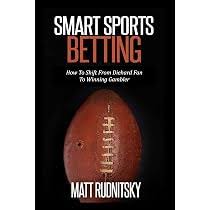
This makes it useful for beginners because it presents sports betting as an activity involving uncertainty rather than a simple path to profit.
What Beginners Can Learn From This Book
One important subject is the difference between a good decision and a lucky result.
A person may make a poor decision and still receive a favourable outcome. Another person may study a match carefully and still lose because the result is uncertain.
The book also discusses the importance of understanding odds and controlling financial exposure.
For our Reddy Book readers, these ideas encourage a more realistic view of sports markets.
Why This Book Is Worth Reading
The personal storytelling makes the subject easier to follow than a textbook filled with calculations.
Readers can learn how confidence, emotion, and financial decisions interact.
It is a useful starting point for players who want to understand sports betting without beginning with advanced mathematics.
2. Fixed-Odds Sports Betting by Joseph Buchdahl
Fixed-Odds Sports Betting: Statistical Forecasting and Risk Management by Joseph Buchdahl takes a more mathematical approach.
The book explains how probability, statistical models, and risk analysis relate to sports betting markets.
It is more demanding than many beginner guides, but it introduces important concepts for readers who want to understand the numbers behind odds.
Understanding Fixed Odds
Fixed odds refer to a price established when a qualifying selection is accepted.
The book explores how these prices relate to estimates of sporting outcomes.
It also examines how probability can be used to compare different expectations.
At Reddy Book, we believe this is useful background knowledge because odds are often misunderstood as promises of a result.
Why Risk Management Matters
A major theme is the need to understand financial risk.
Even a carefully researched prediction can be wrong.
Statistical models also depend on assumptions, and those assumptions may not reflect everything that happens during a match.
For beginners, this book is best read slowly, with time spent understanding each calculation.
3. The Logic of Sports Betting by Ed Miller and Matthew Davidow
The Logic of Sports Betting by Ed Miller and Matthew Davidow explains how sports betting markets operate.
The authors discuss pricing, market behaviour, and the difference between a sports prediction and the price attached to it.
This distinction is useful because knowing which team is stronger does not automatically explain whether a particular market price is reasonable.
Learning How Sports Markets Work
The book introduces readers to the logic behind betting prices.
It explains why markets may offer different prices for the same event and why the market’s estimate can change as new information becomes available.
For example, a cricket team’s expected performance may change when an important player is unavailable.
The same principle applies to football injuries, weather conditions, and team selection.
At Reddy Book, we believe understanding these changes can improve general sports knowledge.
Why This Book Helps Beginners
The book encourages readers to ask better questions about sporting information.
Instead of asking only which team will win, readers learn to examine how expectations are formed.
It also shows that sports markets contain uncertainty and that no method can remove the possibility of loss.
4. The Complete Guide to Sports Betting by Kevin Dolan
The Complete Guide to Sports Betting by Kevin Dolan introduces a broad range of subjects connected with sports markets.
The book discusses betting systems, statistical analysis, rankings, and market movements.
It is useful for readers who want to understand several concepts before choosing a particular area for deeper study.
Understanding Team Rankings
Team rankings attempt to compare the strength of different teams.
However, a ranking can change depending on the information used to create it.
A football team may perform well against weaker opponents but struggle against stronger competition.
A cricket team may have a strong overall record while performing poorly in certain conditions.
For our Reddy Book readers, this shows why one statistic rarely tells the complete story.
Learning About Market Movements
Market movement refers to changes in the odds offered for an event.
These changes may occur because of new information, market activity, or updated expectations.
The book introduces readers to the idea that a price is not fixed throughout the entire period before a match.
At Reddy Book, we believe this is an important concept for understanding live sports information.
5. Sharp Sports Betting by Stanford Wong
Sharp Sports Betting by Stanford Wong is a well-known book about betting terminology, market structures, and analytical methods.
The author, whose real name is John Ferguson, has written extensively about gambling mathematics.
Although the book focuses heavily on American sports, several of its explanations are relevant to understanding sports betting more generally.
Understanding Different Market Types
Sports betting markets can be structured in different ways.
A match winner market concerns the final result, while a points-based or handicap market follows a different set of conditions.
Beginners sometimes confuse these markets because they involve the same sporting event.
This book helps readers understand why the exact market definition matters.
For Reddy Book players, the broader lesson is that the name of a sport alone does not explain how a particular selection is assessed.
Why Betting Terminology Matters
Technical words can make sports betting difficult for beginners.
Terms such as odds, spread, handicap, probability, and settlement describe different concepts.
Learning their meanings makes sports articles and statistical discussions easier to understand.
This book is useful for readers who want a stronger foundation in the language of sports markets.
6. Squares & Sharps, Suckers & Sharks by Joseph Buchdahl
Squares & Sharps, Suckers & Sharks by Joseph Buchdahl examines the relationship between probability, market behaviour, and human psychology.
It is a more advanced book, but its central ideas are relevant to beginners.
The author explores why people may make decisions based on confidence or emotion even when the available information does not support those choices.
Why Human Psychology Affects Decisions
Sports create strong emotional reactions.
A player may feel certain that a favourite team will win because of its recent results or reputation.
However, personal confidence is not the same as statistical probability.
At Reddy Book, we believe understanding this difference is important when reading predictions or discussing sporting outcomes.
Understanding Common Thinking Errors
The book examines the way people interpret wins, losses, and uncertain events.
For example, a series of successful predictions may create the belief that future results are easier to predict.
However, previous success does not remove uncertainty from the next match.
This book is useful for readers who want to understand how emotion can influence financial judgement.
7. Weighing the Odds by King Yao
Weighing the Odds by King Yao focuses on probability, market analysis, and structured decision-making.
The book explores how numerical information can be used to study uncertain outcomes.
It is a useful choice for readers who enjoy mathematics and want to understand the relationship between probability and sports markets.
Understanding Probability Through Examples
Probability describes how likely an event is considered to be.
For example, an estimated probability of 50% means that an outcome is expected to occur about half the time across many comparable situations.
It does not mean the event will alternate between success and failure.
For our Reddy Book readers, this distinction is important because sporting outcomes are not controlled by simple patterns.
Why Historical Data Has Limits
Past results can provide useful information, but they do not predict the future with certainty.
A cricket team may have won several recent matches before facing different conditions or stronger opposition.
A football club may have a good home record but lose important players before its next fixture.
At Reddy Book, we believe historical statistics should be understood as evidence about the past rather than guarantees about the future.
8. Sports Arbitrage: Riskless Investment by George Lynam
Sports Arbitrage: Riskless Investment by George Lynam discusses arbitrage in sports betting markets.
Arbitrage refers to situations where different prices may appear to create a mathematical opportunity across possible outcomes.
Although the title uses the word “riskless,” real-world transactions can still involve significant problems.
These may include changing prices, rejected transactions, market-rule differences, account restrictions, or settlement disputes.
What Is Sports Arbitrage?
Sports arbitrage involves comparing prices for related outcomes across different markets.
The underlying mathematical idea is that prices may sometimes differ enough to create an apparent advantage.
However, the calculations depend on every relevant transaction being accepted and settled as expected.
At Reddy Book, we believe beginners should understand these conditions before accepting claims about guaranteed financial returns.
Why This Book Requires Careful Reading
The mathematical concepts can be interesting, but the title should not be interpreted as proof that financial risk disappears.
Real-world payment systems and betting markets involve conditions that may not match a simplified example.
For beginners, the book is most useful as an introduction to pricing differences and the limits of mathematical assumptions.
9. Lay the Favorite by Beth Raymer
Lay the Favorite by Beth Raymer is different from the other books in our list.

It is a memoir about the author’s experiences in the world of sports gambling.
Rather than presenting a detailed mathematical system, the book introduces readers to the people, businesses, and unusual situations connected with the industry.
Understanding the Human Side of Sports Betting
Sports betting is often discussed through odds and financial figures.
However, the industry also involves personal relationships, business decisions, and ethical questions.
Beth Raymer’s experiences provide a different perspective on this environment.
For Reddy Book readers, the memoir offers insight into the social side of sports gambling.
Why Beginners May Enjoy This Book
The storytelling style makes it accessible to readers who do not enjoy technical books.
It can also help readers understand that the gambling industry is more complex than the numbers displayed on a screen.
This book is a good choice for those interested in real-life stories rather than statistical calculations.
10. The Everything Guide to Sports Betting by Josh Appelbaum
The Everything Guide to Sports Betting by Josh Appelbaum provides an introduction to sports betting language, odds, market types, and financial risk.
It is one of the more accessible choices for readers who want a broad overview before moving to advanced books.
The writing covers several basic concepts that appear repeatedly in sports betting discussions.
Understanding Sports Betting Basics
Beginners often encounter terms they do not fully understand.
The book introduces concepts such as decimal odds, probability, market prices, and different betting formats.
These explanations can make sports-related articles easier to read.
At Reddy Book, we believe a strong understanding of basic terms is useful before exploring complex statistics.
Learning About Financial Discipline
The book also discusses money management and the importance of recognising financial limits.
However, no financial method can guarantee a profit from uncertain sporting outcomes.
For our Reddy Book readers, the most useful lesson is that understanding risk is part of understanding sports betting itself.
Which Sports Book Should Beginners Read First?
Choosing the right book depends on what we want to learn.
Some readers prefer simple explanations, while others enjoy mathematical examples.
At Reddy Book, we believe beginners should select reading material that matches their current knowledge rather than starting with the most technical title.
Best Books for Understanding Basic Concepts
For readers who are completely new to the subject, The Everything Guide to Sports Betting provides a broad introduction.
Smart Sports Betting offers a more personal approach through real experiences and lessons.
The Logic of Sports Betting is another useful choice for understanding how markets work.
These books introduce important ideas without requiring readers to begin with advanced statistical models.
Best Books for Learning Sports Statistics
Readers interested in mathematics may prefer Fixed-Odds Sports Betting or Weighing the Odds.
These books examine probability and analytical thinking in greater detail.
However, beginners may need to review basic mathematical ideas before exploring the more complex chapters.
At Reddy Book, we believe understanding a small number of concepts clearly is more valuable than rushing through difficult material.
Best Books for Understanding Psychology
Squares & Sharps, Suckers & Sharks is useful for learning how emotions and assumptions influence decisions.
Lay the Favorite offers a different perspective through personal storytelling.
Both books show that sports betting involves more than match statistics.
How Reddy Book Players Can Learn From Sports Books
Reading sports books can improve our understanding of how sports markets are discussed.
However, the purpose of learning should be to develop knowledge rather than expect guaranteed financial results.
At Reddy Book, we believe beginners benefit from understanding basic statistics, sporting rules, and the limits of predictions.
Understanding the Difference Between Facts and Predictions
A fact can be checked through a reliable source.
For example, a cricket team’s total score or a football player’s recorded appearances can be confirmed through official match information.
A prediction is an estimate about something that has not happened yet.
Even a prediction based on detailed statistics may be wrong.
For our Reddy Book readers, recognising this difference helps us evaluate sports commentary more carefully.
ReddyBook Betting and the Importance of Understanding Odds
ReddyBook Betting is associated with searches about sports wagering information.
Many of the books in our list discuss how odds work and why they change.
A key lesson is that odds represent a market price rather than a promise of a result.
Even a team considered highly likely to win can lose because of injuries, poor performance, or unexpected match events.
For Reddy Book readers, understanding this difference makes sports analysis more meaningful.
Read more >>> How to Maximise Your Winnings with ReddyBook’s Betting Tips (2026 Guide)
What Makes a Good Sports Book for Beginners?
A useful beginner book should explain difficult ideas in simple language.
It should provide examples that help readers understand the subject without making unrealistic promises.
At Reddy Book, we believe the best books also acknowledge uncertainty and explain why predictions can fail.
Clear Explanations of Sports Terms
Beginners benefit from books that define important words before using them in complex examples.
Terms such as probability, odds, market movement, and risk should be explained clearly.
A book that assumes too much previous knowledge may be difficult for a new reader.
Realistic Examples and Reliable Information
Examples can make complicated ideas easier to understand.
However, the examples should be presented accurately and should not suggest that past results guarantee future success.
For our Reddy Book readers, reliable explanations are more useful than dramatic claims about guaranteed winnings.
Balanced Discussion of Financial Risk
A good book should explain the possibility of loss as clearly as it explains potential returns.
Sports outcomes are uncertain, and mathematical models have limitations.
At Reddy Book, we believe this balanced approach helps readers develop a more realistic understanding of the subject.
Best Sports Books for Beginners: What We Can Learn From These 10 Reads
The ten books in our Reddy Book approach sports betting and sports knowledge from different directions.
Some focus on basic terminology, while others explore probability, statistics, market behaviour, or personal experiences.
Smart Sports Betting and The Everything Guide to Sports Betting offer accessible starting points.
The Logic of Sports Betting helps explain how markets work, while Joseph Buchdahl’s books explore more detailed mathematical and psychological ideas.
Sharp Sports Betting introduces important market concepts, and Weighing the Odds focuses on probability and analytical thinking.
Lay the Favorite offers a different perspective through storytelling, while Sports Arbitrage: Riskless Investment introduces pricing differences and the assumptions behind arbitrage calculations.
For our Reddy Book readers, the most important lesson is that sports knowledge develops through careful reading, reliable information, and an understanding of uncertainty.
Improve Your Sports Knowledge With the Right Books
Sports books can help beginners understand cricket, football, basketball, and other sporting events in greater detail.
They can also explain why odds change, how statistics are interpreted, and why emotions influence financial decisions.
At reddy book instantly, we believe learning these subjects should begin with realistic expectations.
No book can guarantee a correct prediction or remove the risks connected with real-money betting.
The best sports books for beginners encourage readers to question assumptions, understand probability, and separate facts from opinions.
Whether we prefer simple explanations, personal stories, or mathematical analysis, these ten titles provide different ways to explore the world of sports.
By choosing books that match our knowledge level and reading them carefully, we can build a stronger understanding of sporting events and the uncertainty that makes every match different.
FAQs – Best Sports Books for Beginners: 10 Essential Reads to Improve Your Knowledge
1. What are the best sports books for beginners?
Some useful beginner-friendly books include The Everything Guide to Sports Betting by Josh Appelbaum, Smart Sports Betting by Matt Rudnitsky, and The Logic of Sports Betting by Ed Miller and Matthew Davidow. These books introduce odds, probability, market behaviour, and financial risk.
2. Why should beginners read sports betting books?
Sports betting books can help beginners understand how odds work, how statistics are interpreted, and why sporting results remain uncertain. They also explain the importance of financial discipline and avoiding emotional decisions.
3. Which sports betting book is easiest for beginners to understand?
The Everything Guide to Sports Betting by Josh Appelbaum is a useful starting point. It introduces common betting terms, odds, market types, and basic financial concepts in an accessible format.
4. What can Reddy Book players learn from sports books?
At Reddy Book, we believe sports books can help players understand cricket statistics, football analysis, betting odds, probability, and risk management. Reading also helps players separate verified sporting information from unsupported predictions.
5. Which book is best for understanding sports betting odds?
The Logic of Sports Betting by Ed Miller and Matthew Davidow is a useful choice for understanding market prices and how betting odds relate to expected outcomes.
6. Are there sports books that explain betting statistics?
Yes. Fixed-Odds Sports Betting by Joseph Buchdahl and Weighing the Odds by King Yao explore probability, statistical analysis, and mathematical approaches to uncertain sporting outcomes.
7. Can reading sports betting books improve cricket knowledge?
Yes. Books about probability and statistical analysis can help readers better understand cricket scoring patterns, team performance, match conditions, and the limits of predictions.
8. What is the best sports book for understanding betting psychology?
Squares & Sharps, Suckers & Sharks by Joseph Buchdahl explores how human psychology, confidence, and decision-making can affect the way people interpret sports betting markets.
9. Do sports betting books guarantee successful predictions?
No. Sports betting books provide educational information, but they cannot guarantee accurate predictions or financial profits. Unexpected match events can change outcomes regardless of previous statistics.
10. What is the difference between sports statistics and betting predictions?
Sports statistics describe recorded information, such as runs scored, goals, wickets, and previous results. Betting predictions estimate future outcomes and remain uncertain, even when supported by detailed data.
Explore more blogs :




Rohit is a Sports Content Specialist at ReddyBook India, focusing on cricket news, sports analysis, match previews, and online sports gaming information for Indian readers.
He specialises in creating informative, engaging, and easy-to-understand sports content covering major cricket tournaments such as the Indian Premier League (IPL), ICC events, and international cricket series.
At ReddyBook India, Rohit focuses on delivering well-researched articles, cricket statistics, team performance insights, and educational guides about sports betting terminology and platform features.
His content approach prioritises accuracy, reader engagement, and clear explanations, helping sports enthusiasts stay informed about cricket developments and understand important aspects of online sports gaming.